I’ve had many communications from friends and family asking about the coronavirus situation here in Taiwan. It’s true that we’re right next to China, which is the point of origin and (so far) the epicenter of the global outbreak. Nonetheless, I feel as safe here as I would in the US. Read on for more about how COVID-19 has affected my Fulbright year so far, and why I’m not worried. Or, not very worried, anyway.
Timeline: COVID-19 and Me
- 1/11: Taiwan’s elections
- 1/14: departed for Hong Kong to apply for a PRC visa
- 1/21: visa application approved; Taiwan reported first COVID-19 case
- 1/22: flew to Shanghai; Hong Kong and the United States each reported their first COVID-19 cases
- 1/23: Shanghai was quiet, but normal for the day before Chinese New Year’s eve. A handful of cases were reported in Shanghai, but the disease was believed to be contained in Wuhan, which was locked down.
- 1/24: New Year’s Eve. Shanghai streets deserted, hotel restaurant closed. Ramen in a cup for dinner.
- 1/26: moved to a room in a old house on Xinhua Rd. Prepaid Airbnb for 53 days. Kudos to Airbnb for refunding that payment later.
- 1/27: emailed back and forth with a fellow Fulbrighter who had also just moved to Shanghai. We agreed we needed to leave, not because we were worried about getting the virus, but because we were worried about 1) not being able to do any work, 2) not being able to return to Taiwan because of travel restrictions if things got worse, and 3) getting caught in quarantine situation in Shanghai. That was especially scary for me, because I didn’t have any family members to help with food and drinking water. Fulbright office in Taipei advised return to Taipei ASAP.
- 1/28: bought a plane ticket to Taipei
- 1/29: flew to Taipei. No restrictions, although I was asked whether I had been in Wuhan and I agreed to wear a mask in public for 2 weeks. On this day, Fulbright US authorized a voluntary departure for all China-based Fulbrighters.
- 2/2: US restricted travel from China
- 2/5: Fulbright suspended all programs in China. Some Fulbrighters had trouble getting flights out, but as far as I know, everyone was able to leave.
- As of February 21, Shanghai had 333 cases of COVID-19 in a population of 27 million. That’s about one case per 81,000 people. Nonetheless, according to this article, the city remained as quiet — maybe more quiet — than when I left on January 29.
- As of today, March 1, Taiwan has 39 cases in a population of 23 million, about one case per 600,000 people.
Lucky Breaks, Sensible Precautions
I am incredibly lucky. I left Shanghai just in time to avoid travel restrictions. But more importantly, unlike most China-based Fulbrighters, I didn’t have to end my adventure early, because I was allowed to return to Taiwan. I got my office back — I even moved back into my old apartment! I’m really grateful to Fulbright for allowing my fellow cross-Strait Fulbrighter and me to finish out our time here even though that wasn’t the original plan.
I’m also lucky to be in Taiwan, which is handling the outbreak really well. There’s always the possibility that the number of cases could skyrocket, and we’ll all be panicking, but so far, the government here is doing a really good job, thanks to …
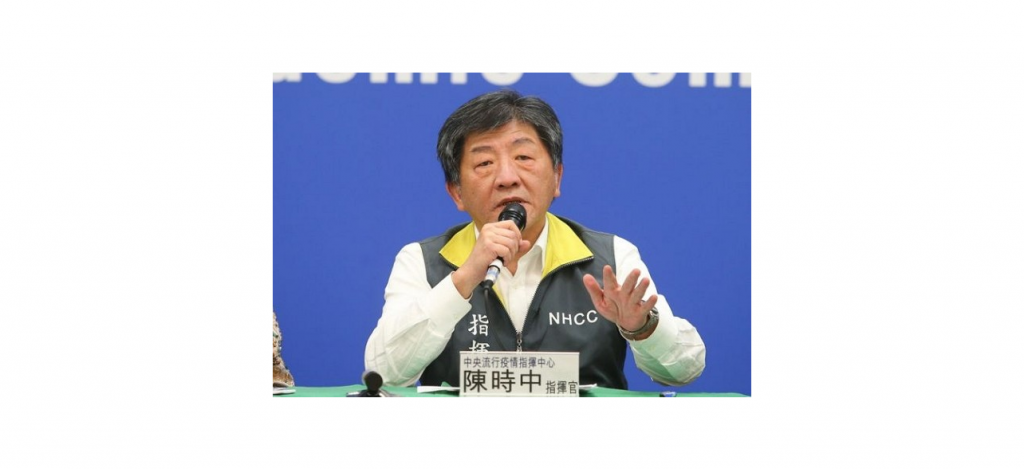
Daily press briefings from the Minister of Health and Welfare, Dr. Chen Shih-chung. He was the second-in-command during the SARS outbreak in 2002, and he wrote the after-action report on what went right, what went wrong, and what needed to change in order for Taiwan to be ready for the next one. He exudes confidence and expertise, and he is totally credible. When he talks, people believe him. He’s not covering up, minimizing, or sugar-coating.
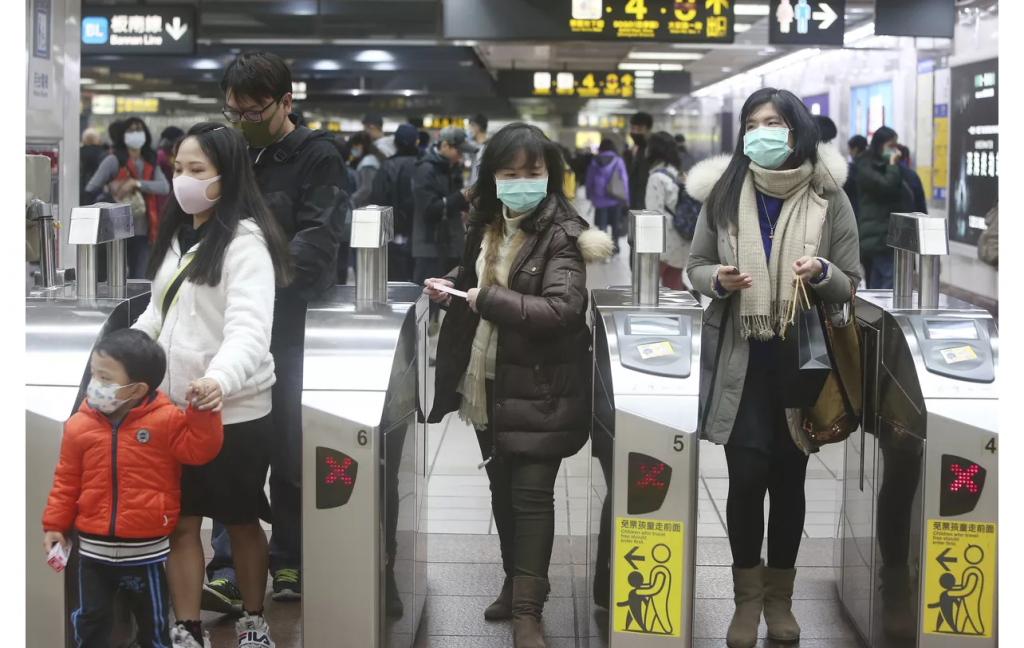
Taiwanese people’s willingness to take disease control measures. I know hand-washing is more important for self-protection than wearing a mask (and I’m washing mine constantly), but wearing a mask helps prevent sick people from spreading germs. Taiwanese often wear masks when they don’t feel well, and right now, almost everyone is wearing a mask in crowded places. That not only reduces the chances of spreading COVID-19 – it also has a good chance of reducing the spread of other illnesses and thereby reducing the pressure on the health care system.
Taiwan’s excellent universal health care system, which provides good, affordable care to everyone. Which means that when people are sick, they don’t just keep swallowing Advil and going to work: they actually go to the doctor, which means Taiwan can catch COVID-19 cases early. Here’s a New York Times article explaining how Taiwan’s National Health Insurance system works.
Taiwan’s vigilant society, which has reported cases that didn’t self-report. One businessman who returned from Wuhan went to a dance hall. His partner thought he seemed sick; she asked if he’d been in China and he said he had, but he hadn’t reported to the authorities. She turned him in. It seems harsh, but here in Taiwan, most people don’t think you have the right to recklessly spread disease.
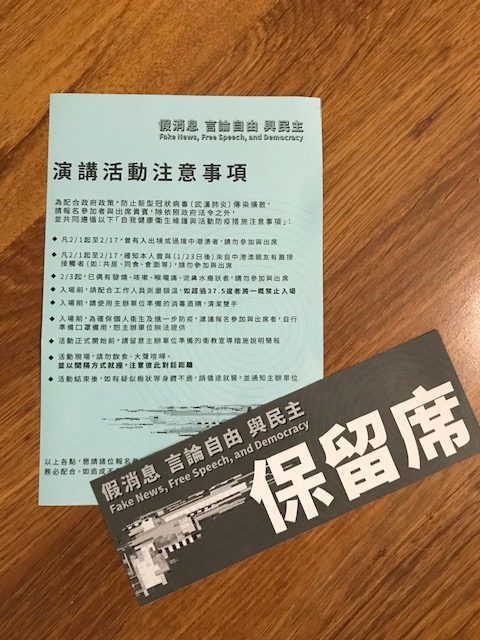
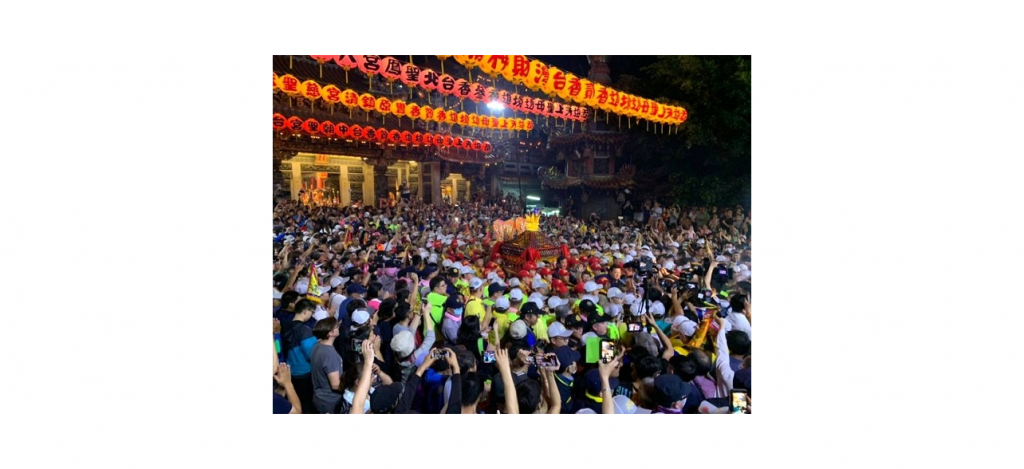
Sensible people taking sensible precautions, including things like cancelling a big religious gathering. The head of the Dajia Mazu pilgrimage originally said the goddess Mazu would protect the gathering, but under pressure he decided not to test her powers. This, in contrast to South Korea, where a Christian group that believes faith can prevent disease is reportedly responsible for an explosion in the number of cases — and continues to refuse to take measures to control infection within the church.
An Editorial Comment
(This is my opinion — nothing to do with Fulbright.)
I know Taiwan is vulnerable to COVID-19. We already have almost 3 dozen cases, including 1 death and 9 recoveries. There has been community transmission, and a few infected people went about their normal business for several days before being diagnosed and quarantined. There has been panic-buying of masks (the government got that under control by taking over the production of key medical supplies and rationing masks) and toilet paper (due to rumors that the materials used for toilet paper would be used for masks instead). We could see a surge in the number of cases any moment now.
The government has struggled to balance the public’s need for information with patients’ right to privacy. Some politicians have criticized the health ministry for not giving details about where infected people are, and at least one patient has revealed a lot of private information on social media.
Despite these weaknesses, I still feel confident that we are as safe in Taiwan as we would be anywhere. People trust this government, which is handling the crisis professionally. President Tsai is not on TV throwing out nonsensical opinions about the future of the virus. Instead, she put scientists in charge of responding to the disease, and they give a sober, informative press conference almost every day.
Meanwhile, Trump says COVID-19 will magically disappear, even though his administration spent 3 years dismantling the institutions previous US administrations put in place to manage infectious disease outbreaks. Here in Taiwan, the doctor who did the “postmortem” on the last major crisis is in charge of managing the current one. In the US, a science-skeptic with no medical or scientific training named Mike Pence is in charge.
Taiwanese are capable of falling for rumors and they can be scared, but this society believes in science. People vaccinate their children, and as soon as a vaccine is available for COVID-19 they will take it. They don’t believe “Big Pharma” created the disease to make money. They’re not embarrassed to wear surgical masks in public. They don’t think it makes them look weak to take precautions against infection.
Because everyone has access to healthcare, people are not waiting until they’re at death’s door to see a doctor. They’re getting tested, and if they’re positive they’re going into isolation. If they’re negative, they’re letting out a long sigh of relief. They’re not waiting, scared and spreading germs, because they can’t afford the huge medical bill that even a negative test can bring in the US. In other words, in Taiwan we don’t have to worry that our food is prepared by minimum wage workers with no health insurance who are exhausted from working three jobs and keep sneezing into our sushi.
Taiwanese are capable of being selfish, of course. We’ve had a pretty ugly debate over whether to admit wives and children of Taiwanese living in Wuhan — a lot of Taiwanese said only people who have legal residency here should be allowed in, even if a spouse or parent is Taiwanese. But a guy I barely know gave me an N-95 mask in case things suddenly get worse. I’d much rather be a foreigner in Taiwan in the midst of an outbreak than to be a foreigner in the US if COVID-19 really takes off there.
Plus, we’re on an island.

NAILED IT! Great observations!
I have corrected the post to reflect that the incidence of cases in Taiwan is about 1 in 600,000. Thanks to my friend David Holiday for correcting my math!