In 1945, Chiang Kai-shek’s Nationalist Chinese government took over Taiwan from the Japanese colonial government that had ruled since 1895. In 1949 the Nationalists lost a civil war with the Communists, and they moved their government and military to Taiwan. Something like two million Chinese, mostly soldiers, administrators, and their dependents, moved to Taiwan in those four years.
Their plan was to return to mainland China, but in the meantime, the ’49ers needed housing. Many of them moved into housing vacated by the departing Japanese or into military barracks. Over the decades, military dependents’ villages, (juancun 眷村) developed into thriving communities. However, their isolation from the Taiwanese communities surrounding them contributed to tension between the long-time Taiwan residents and the ’49ers .
In the 1990s the government decided to end the isolation of military families. Much of the military-owned land was redeveloped, but rather than let this history die out completely, local governments have worked to preserve it by opening military dependents’ villages to new uses.
The military dependents’ villages were built for Chinese, but over the years, their residents — the ’49ers and their children and grand-children — have become Taiwanese.
Another group that needed housing were the American military advisors who came to Taiwan to support the mutual defense treaty between the US and the Republic of China. Thousands of American military personnel passed through Taiwan between 1950 and 1979, when the treaty was cancelled.
I visited Jianye Village in Tzoying in Kaohsiung City and the Yangmingshan American Military Housing site in Taipei to see how military officers (both sites preserve only housing occupied by high-ranking officers) lived back in the day.
Jianye Village
Jianye Village is a cluster of single-family houses built for commander-level officers in the ROC Navy. Prior to 1945, the site was military housing for the Japanese colonial government, and many of the houses were originally built in the Japanese era. They have been rebuilt repeatedly, but many became vacant and fell into disrepair. With help from the national government, Kaohsiung City, the Ministry of National Defense, and the Navy, Jianye Village is coming back to life. Artists and others can apply to refurbish and live in homes in village as long as they agree to maintain the homes’ exterior appearance and open their homes to visitors from time to time.
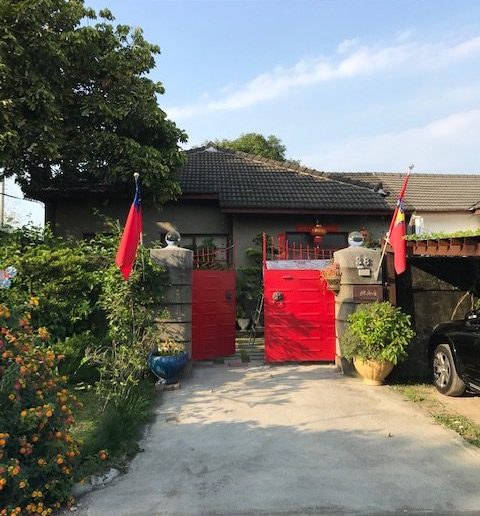
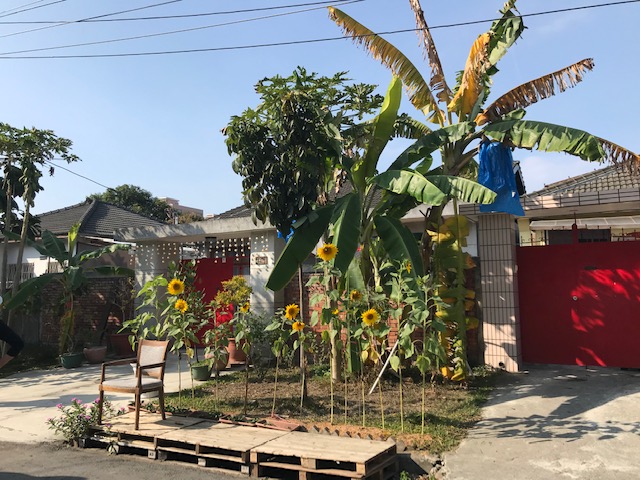
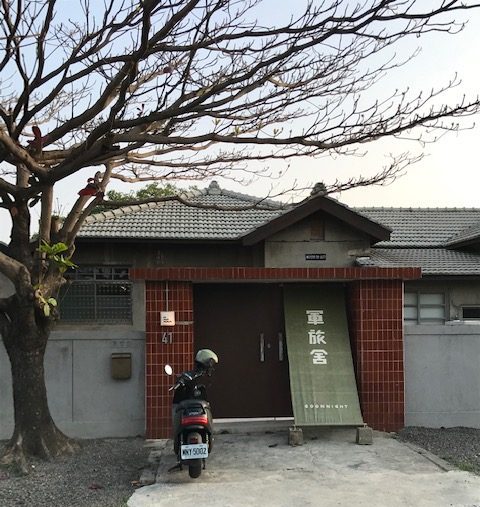
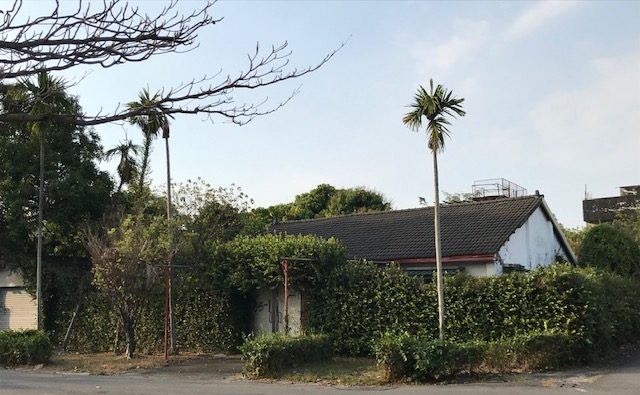
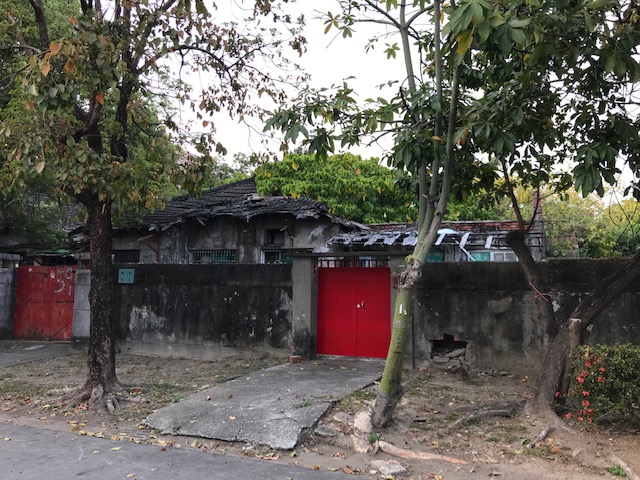
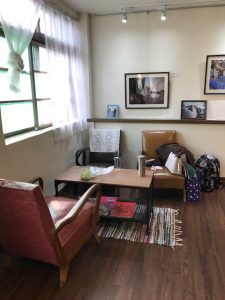

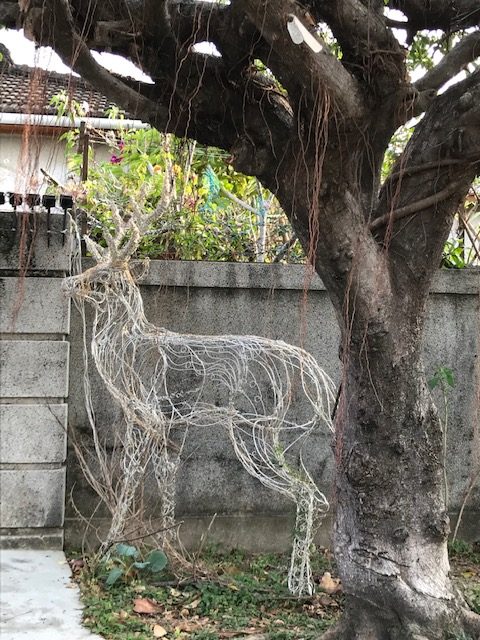
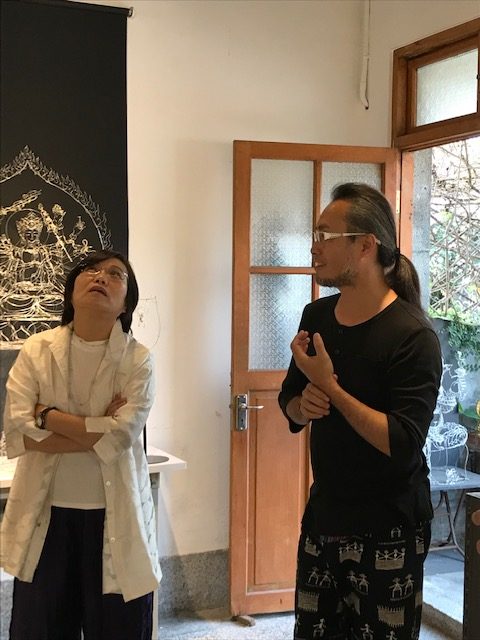
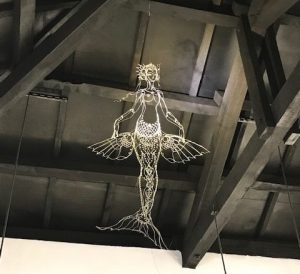
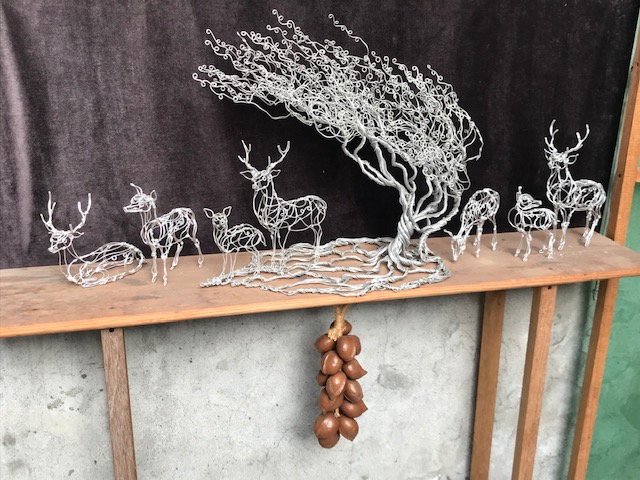
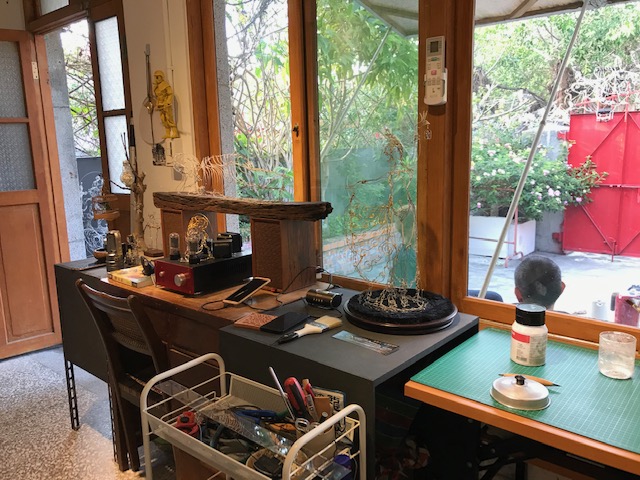
Near Jianye Village is the Farewell, 886 Cultural Park, a museum of Military Dependents’ Village history and culture. Our guide there was a retired officer who lived in military communities in Zuoying as a child.
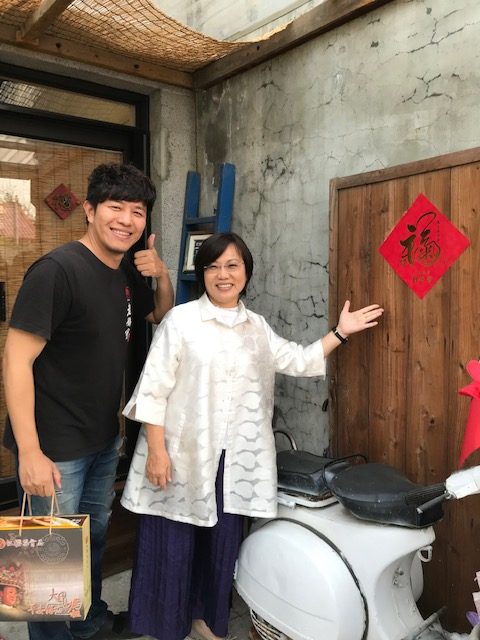
I visited Jianye Village and Farewell, 886 with my friend Liu Shyh-fang. She represents Zuoying in Taiwan’s national legislature. She’s a member of the Democratic Progressive Party, which emphasizes the importance of valuing Taiwan’s local culture. Often we assume that career military personnel (many of whom are ’49ers) don’t get along with the DPP.
That’s not what I saw in Zuoying. Liu Shyh-fang clearly cares a lot about this project, and she values the history that’s preserved there. Our docent at the museum made it clear that he appreciates her support, and she made it clear that she respects his life story and his commitment to keeping history alive in the museum.
Yangmingshan American Military Housing
Yangmingshan is a mountain at the northern edge of Taipei City. It’s also where the Americans set up shop when they came to help Chiang Kai-shek fend off the Communists after the outbreak of the Korean War. Many American facilities — the Armed Forces Radio station (now ICRT), the language training school for American diplomats, churches, stores, etc. — were located on Yangmingshan. There are currently about 150 houses built for American service personnel still standing in the area. Some are occupied, but several have been remade into restaurants and coffee shops catering to visitors who want to see a little bit of America in Taiwan.
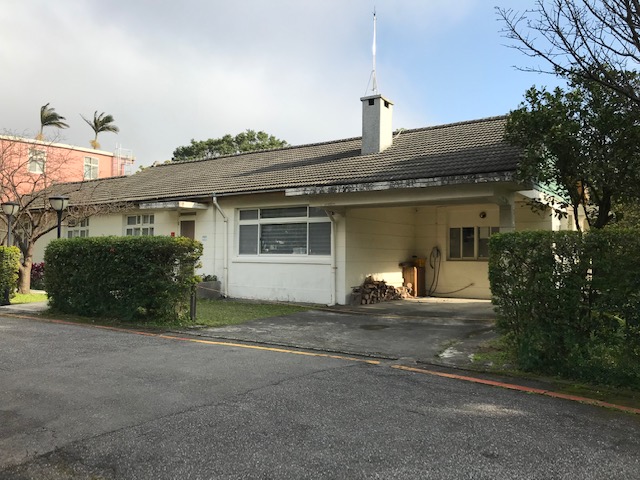
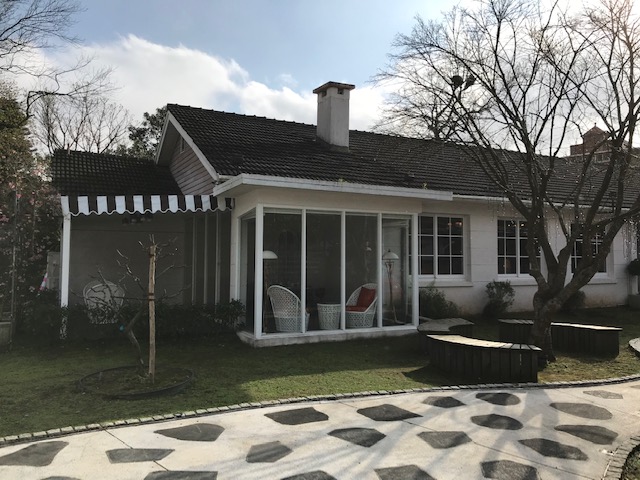
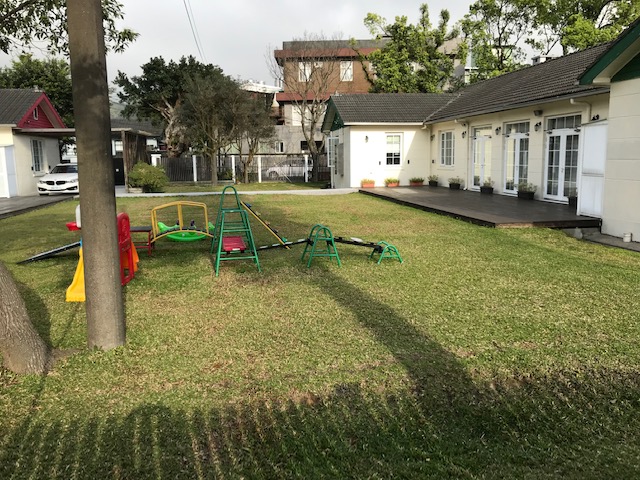
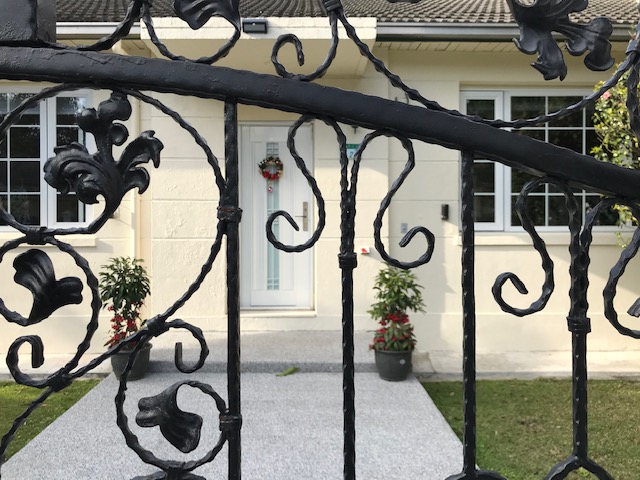
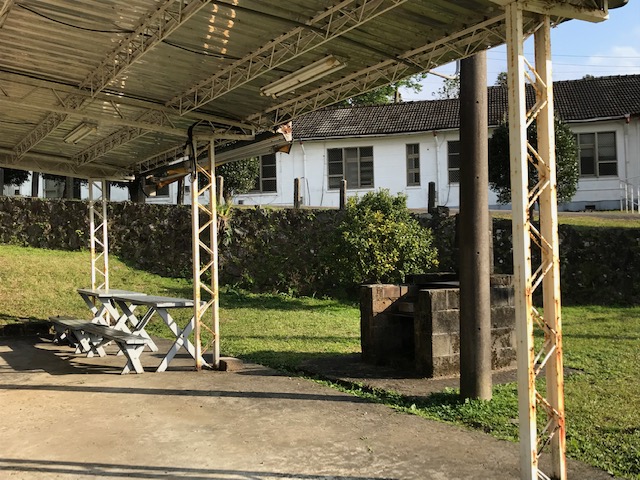
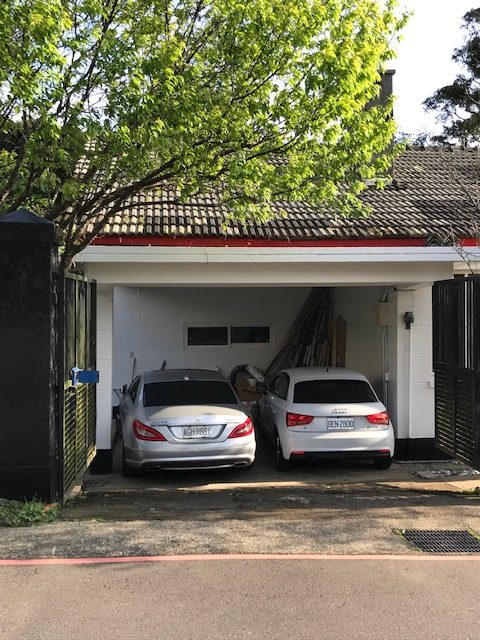
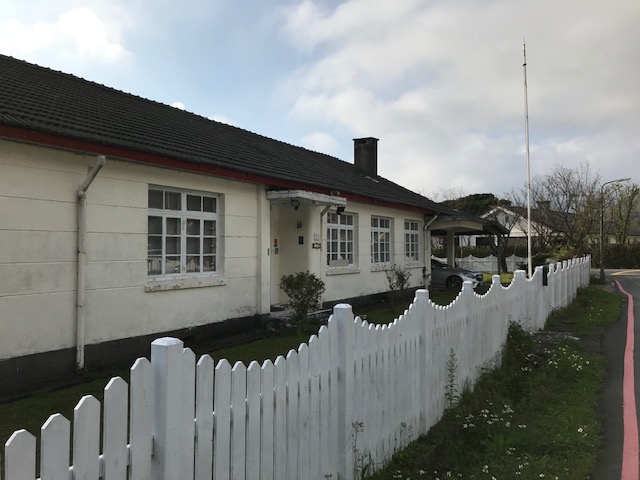
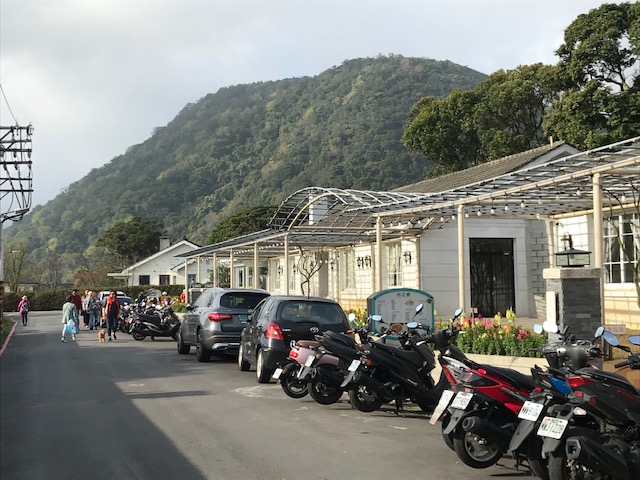
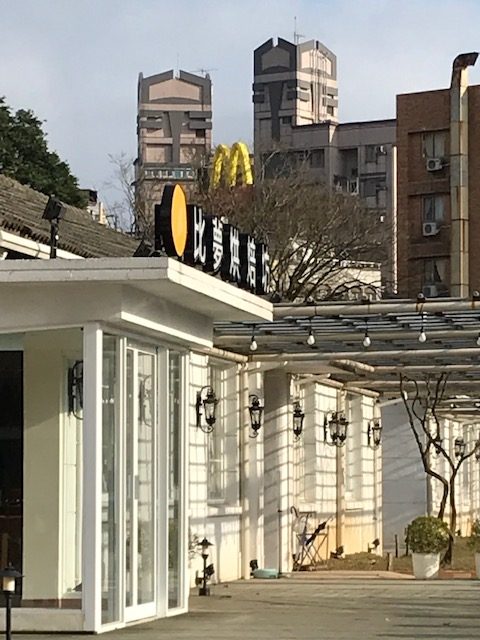

My wife and I live in the military village in Kaohsiung that you visited, and run one of the guest houses there: A Touch of Zen. I am a Taiwan-born American and my wife is a Kaohsiung local who grew up in a nearby military village. We would welcome you to visit us if you are ever in the area again. I enjoyed reading your article and seeing photos of some of our neighbors and their houses. A couple of minor corrections: Technically, all of the homes, guest houses, and the art studio you photographed are in Jianye Village. Mingde Village is on the other side of a little dry creek bed that divides the two, and includes the Farewell 886 Museum. So you spent time in Mingde, but all of the Kaohsiung photos you posted were taken in Jianye Village, not that it makes much difference as both villages are essentially part of the same community. Although we were allowed to change the interiors of the homes, we were also given a lot of restrictions on interior renovating, to preserve historically important design and architectural elements. Things like knocking out walls, replacing hardwood floors, or adding a bathroom were generally not allowed. All of which was fine with us, because we wanted to preserve what was original and unique about our house. By the way, McDonald’s opened its first location in Taiwan in 1984, 6 years after the US military had left, so no, those golden arches near the Yangmingshan compound were not there back in the day. Thanks for the write-up and photos!
Thanks so much for the corrections! I will update the post.
I loved living in Taichung Taiwan. My Dad was stationed at CCK 1968-1971. We lived in Spring Villa Compound. I went to Morrison Academy. Beautiful memories.
Your pictures bought back memories. Thanks!! Just an FYI. I think it was 1982 or 83 when the first McDonalds came to Taiwan
Very interesting – about 10 years ago i used to climb the Yangmingshan trail up to the university and wander around those houses – quite a few were empty and a bit falling down – they look much better in your photos – am i thinking of another place? I have photos somewhere if you’re interested?
I think they probably are the same houses. The place is pretty big, and I didn’t visit nearly all of it. Also, they’ve done a lot of work on many of the houses in recent years. It’s possible some of the ones you saw really did fall down, and some got fixed up. I’d love a photo or two of how they used to look to add to the post. Send to my email: shrigger@davidson.edu. Thanks!
Thanks for all these comments. I’m so happy to have stirred some good memories. Special thanks to Carl Thelin for the correct information. I’m hoping to return to Jianye Village soon – I’ll stop by Touch of Zen and thank you in person if I do.
We lived on Yangmingshan from 1968-1970. My father was Chief of Staff for Taiwan Defense Command and the highest-ranking U.S. Air Force member on the island. He and my mom met Chiang Kai-shek (at his summer home further up the mountain) a few times as part of my father’s military role in TDC. Great memories for our whole family. Life-long friendships forged there continue to this day.
John Des Portes
Mesa, Arizona