Less than 12 months ago, Taiwan’s Kuomintang (KMT), or Nationalist Party, seemed unstoppable. After losing the presidency and legislative majority in 2016, the party bounced back with a huge victory in the November 2018 local elections. With incumbent president Tsai Ing-wen’s approval ratings in the basement, the KMT seemed on track to win back national power in January 2020.
What a difference a year makes. As of October 1, the aggregated poll estimate in my favorite Taiwan politics blog has Tsai leading her KMT opponent, Han Kuo-yu, by about 15 percentage points. The KMT nominated a weak, divisive candidate in 2016. Many KMT members are asking how this could be happening again, including several dozen KMT youth activists who gathered today to share ideas.
The young KMT activists (and no, it’s not an oxymoron!) in attendance spelled out what they think the party needs to do to recover, if not in time for this election, then for the future. They defined themselves as the “post-martial law generation” — folks born after the KMT lifted the martial law restrictions it enforced from 1947 to 1988.
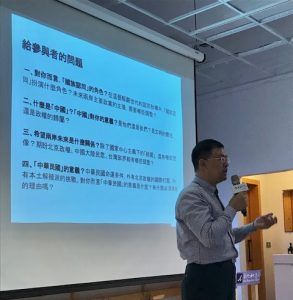
The speeches were thoughtful and bold. The young activists asked the KMT to grapple with profound questions (What do we mean by “China”? What is the relationship between “China,” the Republic of China, and the People’s Republic of China?).
They called on the KMT to acknowledge the wrongs of the authoritarian era and show empathy for its victims. They criticized its failure to evolve new positions to accommodate changes in Taiwan-PRC relations, and they implored their party to stand up more forcefully to Beijing.
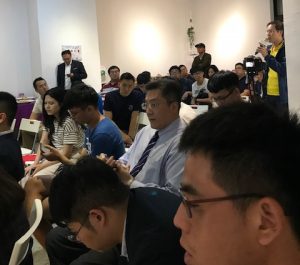
One of the young activists I spoke to after the event said it was scary to speak so frankly in front of the handful of senior party figures in attendance, but that didn’t stop him. After the event I asked the organizer if he was nervous, but he said the party’s troubles are rooted in its failure to listen to new voices. The only way to save the KMT is to speak. These young people are willing to take risks to create a KMT that can appeal to Taiwan’s post-martial law generations.

In interviews in the past couple of years I heard complaints from young KMT local council members that the party doesn’t do enough to support young people and that it’s hard to get ahead if you’re not the child of someone with clout in the party.